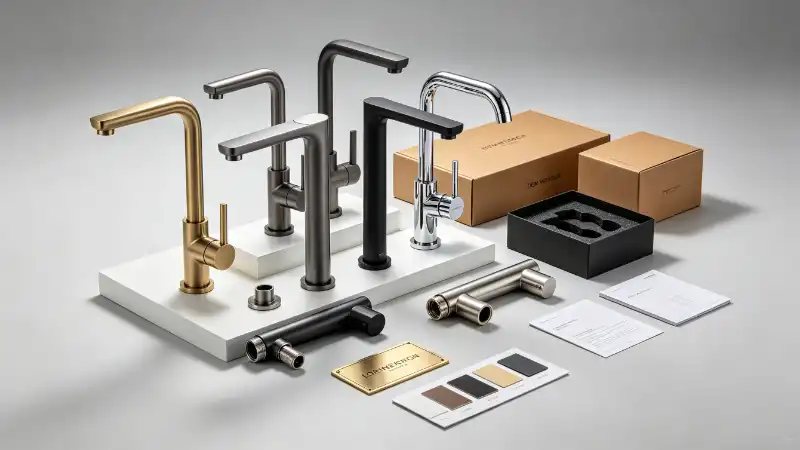
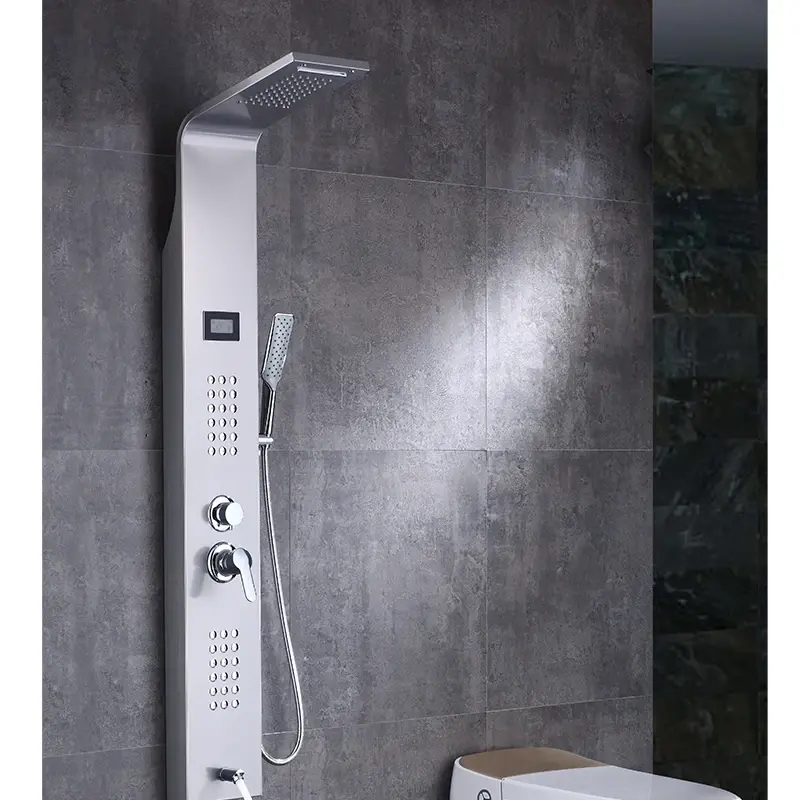
If you’re sourcing faucets, you may meet this question come up again and again:—brushed finish, or PVD coating?
At first, it doesn’t seem like a major decision. But in reality, this is one of those decisions that looks small at the beginning and then slowly becomes important later.
Not immediately. Usually after customers begin using the product.
I still remember a UK-based client back in 2019 who was launching his first kitchen faucet store on Amazon. He had a tight startup budget and only planned to test the market with a 50-unit initial batch, and he stumbled on our MY-2061-2 brushed gold bathroom basin faucet and chrome PVD version in our online shop. He shot a blurry phone pic of both and fired off a one-line message: “Which one should I pick for my Amazon listing?” That was literally all he sent—no background on his target customers, no price point he was aiming for, that was all. No context.
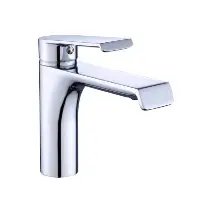
To be honest, when making choices, many people will asking, "Which option is better?" However, that very question is fundamentally flawed.
The question you should think is:
Who are your customers? Where is your market?
The U.K client just starting out on Amazon. He is insisted on using a PVD finish because it "looked more premium."
However, he soon discovered that it couldn't keep costs down, making their pricing uncompetitive—and, consequently, the product simply wouldn't sell.
He finally adjusted their strategy to the following:
Focus primarily on the brushed finish version (for volume) + Offer a limited quantity of the PVD version (for profit margins).
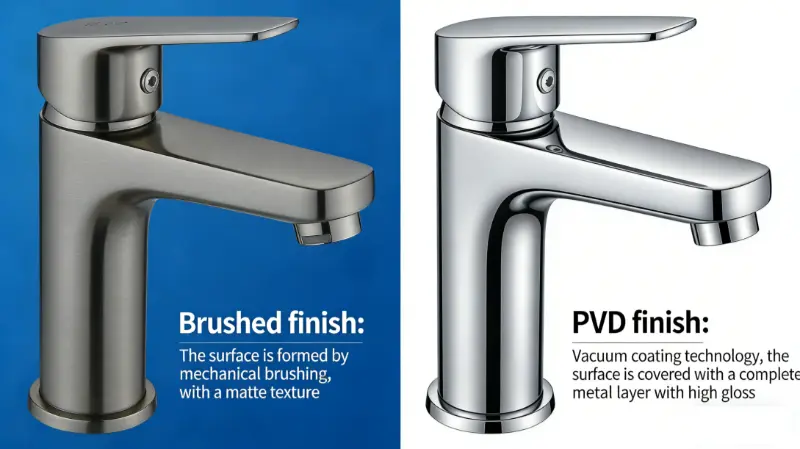
A brushed finish is not complicated. It has a slightly matte surface with fine texture. It is not designed to look perfect—it is designed to be more forgiving.
Nothing fancy.
But in daily use, it behaves differently from what people expect.
Scratches? They don’t really stand out.
Fingerprints? Less obvious.
Water marks? Still there, but not as annoying.
For households where the faucet gets used all the time, this actually matters more than people think.
Minor scratches tend to blend in. Fingerprints are less obvious. Even if the faucet is used frequently, it doesn’t start looking “old” too quickly.
Some clients don’t realize this until they start getting feedback from their customers. And by then, the product has already been on the market for a while.
PVD is a different story.
Compared to brushed finish, it offers better resistance to corrosion, wear, and discoloration. This makes it suitable for environments where durability is a key concern—such as humid areas or regions with hard water.
Visually, PVD-coated faucets usually look more refined. The surface is smoother and more uniform, which gives a more premium impression.
This is the question we get hit with all the time from faucet buyers: Which finish lasts longer—brushed or PVD coating? Technically, PVD coating is stronger in terms of raw resistance to corrosion and wear, and that part is an undeniable fact. But “lasting longer” in the real world isn’t just about technical specs—it’s about how the faucet looks while aging, and that’s where the two finishes diverge dramatically.
Brushed finishes don’t stay perfect, but they hide wear so well that they never look obviously worn. The fine texture masks scratches, fingerprints, and minor water damage, so the faucet maintains a consistent look for years. PVD finishes, on the other hand, stay immaculately clean-looking at first—but once a scratch, chip, or water mark does show, it’s far more noticeable on the smooth, uniform surface. A small blemish on a PVD faucet stands out like a sore thumb, while the same blemish on a brushed faucet would be invisible to the untrained eye.
When it comes to faucet finish maintenance, opinions split along market lines. In markets where buyers hate wiping down their faucets every day for a perfect look, brushed finishes get far better feedback—not because they’re technically superior, but because they’re low-maintenance and forgiving. PVD finishes fit better in markets where appearance is the top priority: luxury homeowners, high-end interior designers, and buyers who don’t mind a little extra upkeep to keep their faucets looking brand new.
Personally, I think the “which one lasts longer” question is the most misleading in faucet sourcing. What buyers really care about is whether their faucet still looks good after 6 months of daily use—and that answer depends entirely on their market’s expectations, not just a technical spec sheet.
So, how exactly should you choose?
You can apply a very simple decision-making:
Choose Brushed finishes if you are:
Involved in wholesale or commercial projects
Operating in a price-sensitive market
Focused primarily on high-volume sales
Choose PVD finishes if you are:
Building a brand or selling via e-commerce (e.g., Amazon)
Looking to differentiate your products
Targeting customers who prioritize aesthetics
A Word of Experience (for Purchasing Managers)
After years in the industry, we’ve arrived at a very practical conclusion:
There is no single "best process"—only the choice that is "best suited for *your* market."
Many of the clients we’ve worked with ultimately adopt a hybrid strategy:
Core Products: Focus on cost control (Brushed finish)
High-Margin Products: Focus on brand enhancement (PVD finish)
This approach allows you to achieve both high sales volume and strong brand building.
If you’re still deciding, don’t overthink it too much at the beginning.
Get samples.
Put them side by side. Touch them. Use them if possible.
Most of the time, the decision becomes obvious once you see them in real life.
Finish is one of those details that doesn’t look critical — until it is.
It doesn’t usually affect the first impression too much. But it can influence what happens after the product reaches the end user.
And that part is harder to fix later.
If you need help comparing options or want to look at samples, feel free to reach out. Even if you’re still early in the process, that’s completely fine.