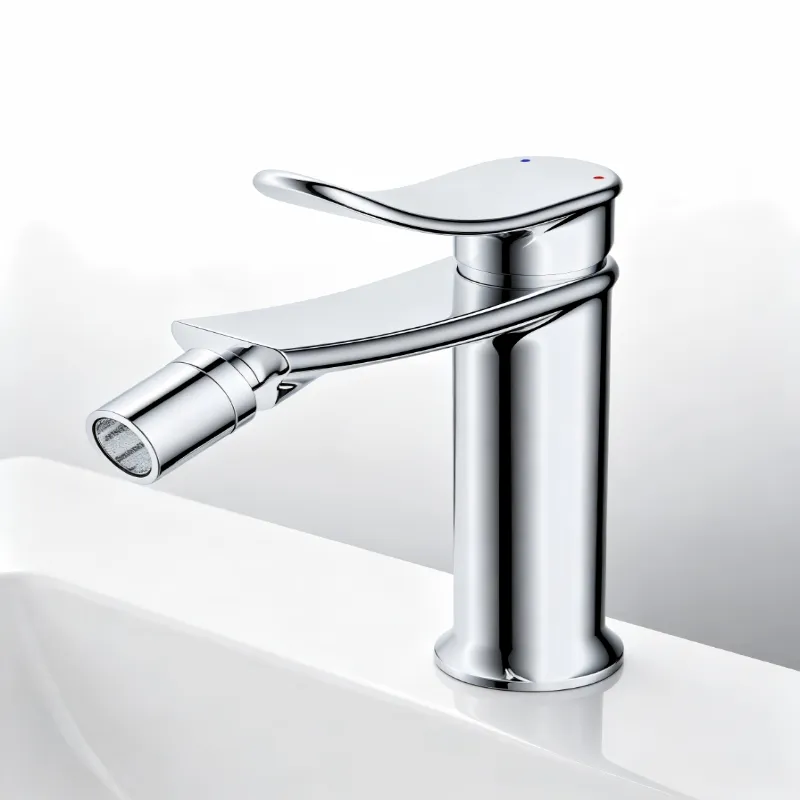
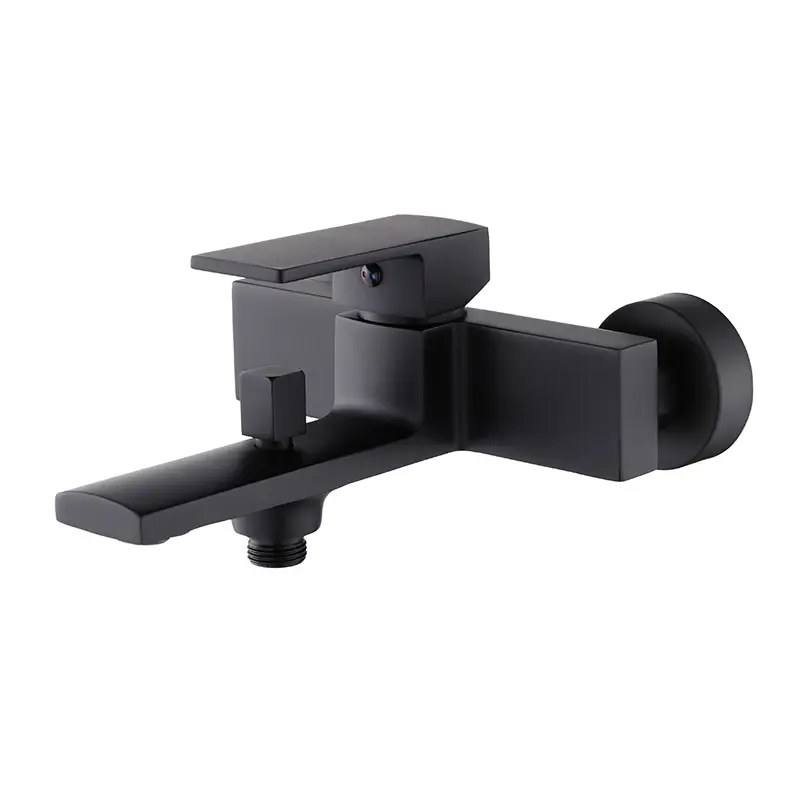
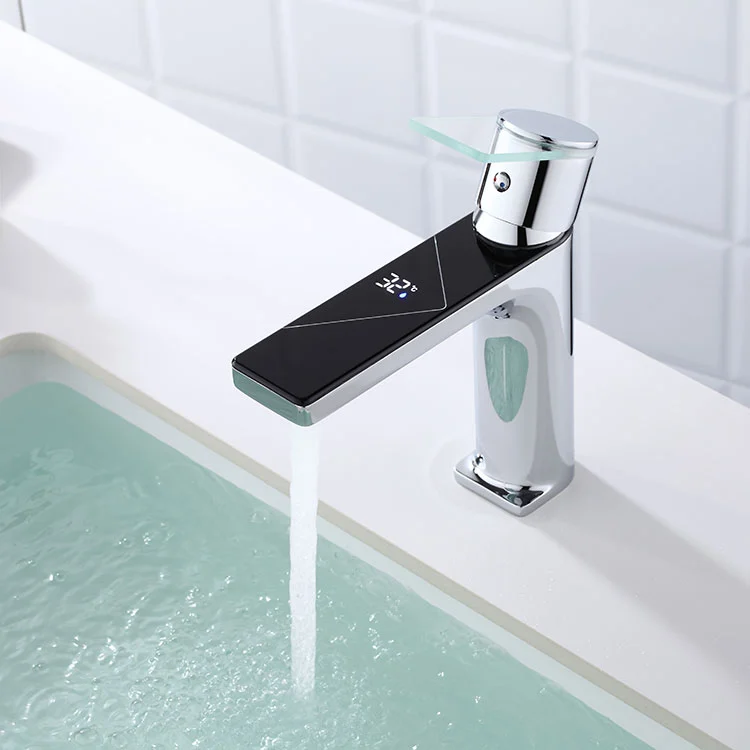
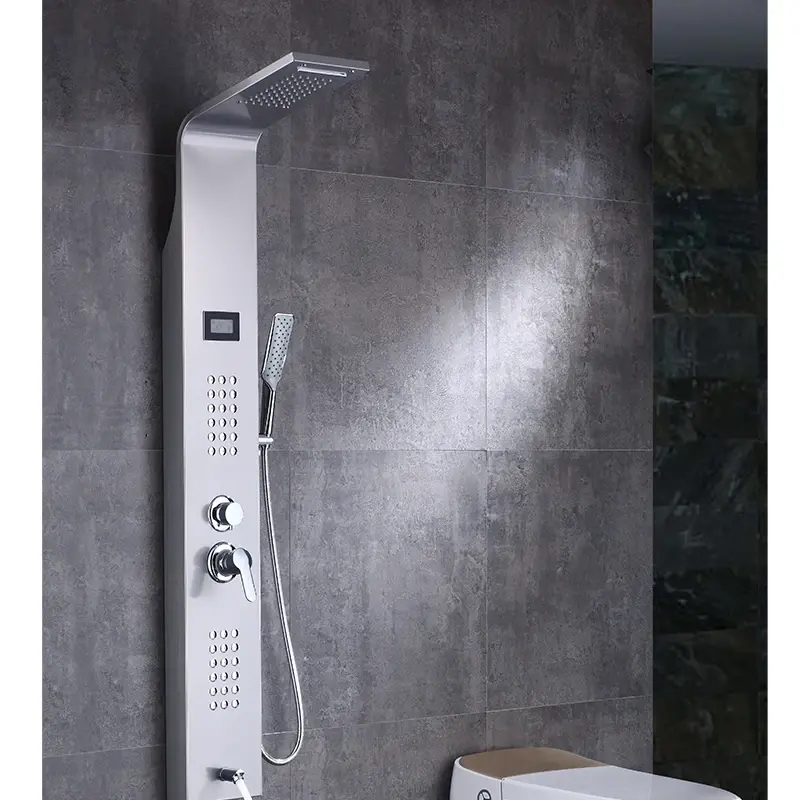
When a faucet costs a few dollars more than another, the cartridge is rarely the first thing anyone talks about.
It usually comes up later. Often months later — when a distributor starts getting complaints about dripping or a stiff handle, and someone finally asks what was inside the faucet all along.
Our factory has been casting Single-Handle Solid Brass Basin Faucet bodies in Wenzhou since 1984. After forty years of it, the cartridge is the part we'd bring up earlier in any conversation about faucet quality. Not because it's impressive to look at — it isn't — but because it decides how a faucet feels and how long it behaves.
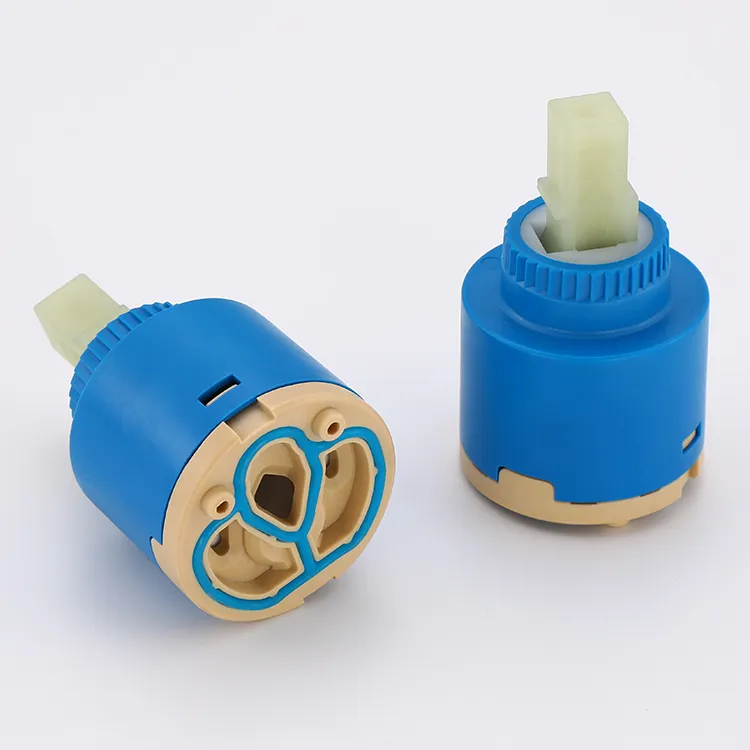
In a single-lever faucet, the cartridge sits between the handle and the waterway. Inside it, two polished ceramic discs do the work: one is fixed, one turns with the handle, and the gap between them controls flow and temperature.
It looks simple. Getting it right in production is not.
The finish of the discs, the seals, the housing material, the lubricant, and how consistently the line assembles them — all of it changes how the faucet feels on day one and how long it behaves on day one thousand.
That's why two faucets can look identical in a catalogue and feel completely different in the hand.
Questions about cartridge brands come up in almost every sourcing conversation. Here is the answer we give, in plain terms:
●Our standard line runs on Naijie ceramic cartridges, made in Wenzhou — the same city where we cast and machine the faucets. They're proven in high-volume production, and sourcing them stays easy for years.
●For projects with specific requirements — a hotel spec that names a brand, or a market that wants established documentation — we fit Sedal or Wanhai
cartridges instead. "Customize the cartridge" is a normal request in our workshop, not a special favor.
The point is not that one brand is universally better. It's that the cartridge should be chosen for the product and the market — and that the factory should be able to tell you what's in the box without checking.
"500,000 cycles" is the figure printed on most decent ceramic cartridges, including the ones we use. It comes from a lab test: open, close, open, close, under controlled conditions.
It's a useful number. It is not a promise that a faucet will last exactly thirty years in every household.
Water quality, pressure, how often the faucet gets used, and how it's installed all move that number in real life. When a spec sheet quotes a cycle figure, the useful next step is the test documentation for the actual model being shipped — not a number printed in a brochure.
35mm and 40mm are the two cartridge sizes you'll meet most in single-lever faucets. Which one fits depends on the body, the handle, and how the waterway is designed — it's not a style choice.
Here's the part that often gets forgotten: what happens when the customer needs a replacement cartridge three years from now?
For a distributor building a long-term product line, spare-part availability matters as much as the original spec. We keep cartridge stocks for the models we ship and can supply replacements long after the first order. It's worth asking any factory the same question — the answer says a lot about how they think about the product's second life.
When a customer sends us a competitor's faucet and asks why our price is higher, the answer is usually in the parts you can't see: the brass grade, the plating layers, the QC procedure — and yes, the cartridge.
Three quotes: 15.20, 16.80, $18.10. The cheapest one is only the best deal if the specification is actually the same. If the cartridge, the material, or the inspection differs, you're comparing different products that happen to look alike.
For a one-time shipment, that's a one-time risk. For a private-label range, it's the difference between managing a brand and managing complaints.
When a faucet line is being approved — new models, a new supplier, or a new market — this is the list we'd use ourselves:
1. Exact cartridge brand and model. "35mm ceramic cartridge" is a category, not a specification.
2. The technical datasheet. Read it, don't just hear it.
3. Cycle test documentation for that specific model.
4. How and when the factory tests for leaks — at what pressure, at which stage of production.
5. Confirmation that production uses the same cartridge approved in the sample.
6. Whether replacement cartridges will be available after the original order.
None of these take long to ask. They save a lot more time than they cost.
A faucet should look right when it leaves the factory. That part is easy — plating, polishing, and a good photo make anything look right.
The harder part is still working properly after three years in a home, through hard water, low pressure, and daily use. That's the part the cartridge decides.
We test cartridge before assembly, and assembled faucet before packing — in a workshop of about 23,000 square meters where casting, machining, plating, and assembly happen under one roof. When we say a faucet is built around its cartridge, we mean the design starts there, not that a component gets screwed in at the end.
If you're working on a faucet range or a project and want to compare cartridge options, we're glad to share the specifications and test documentation of the models we produce. No pitch — just the data, and a straight answer to whatever you're comparing.
WhatsApp: +86 135 8882 7519 Email: marketing3@meiya.cn
A good faucet should not only look right when it leaves the factory. It should still work right after it reaches someone's home.