Faucet finish failures cause costly after-sales headaches for importers. Compare electroplating, PVD & powder coating from a 12-year faucet export specialist, pick durable faucet finishes matching your market climate & budget.

Last year, a distributor from Poland contacted me after receiving two batches of Luxury High Arc Brass Kitchen Faucet from different suppliers. He wasn't comparing prices anymore. He was comparing customer complaints.
Both faucets looked almost identical when they were unpacked. They had a similar brushed texture, nearly the same gold color, and even comparable packaging. If you placed them side by side in a showroom, very few people could tell which one cost more.
About eight months later, he sent me another message. One batch still looked almost new after installation. The other had already developed fine scratches around the handle, and the color near the spout was beginning to look uneven.
His question wasn't, "Which factory made this?" Instead, he asked, "Why did two faucets that looked the same perform so differently?"
I've heard similar questions countless times over the past twelve years. Interestingly, most importers spend weeks comparing faucet bodies, ceramic cartridges, or prices before placing an order. Only a handful ask detailed questions about surface finishing.
Yet from my experience, the finish is often what determines whether homeowners are still happy with the faucet two or three years after installation. A showroom sample only shows how a faucet looks on the first day. The manufacturing process behind that finish determines how it performs for years afterward.
That's why I believe understanding electroplating, PVD, and powder coating is just as important as choosing brass or stainless steel.
Although matte black and brushed gold have become increasingly popular, polished chrome remains the most widely sold faucet finish around the world. And honestly, I'm not surprised.
For supermarkets, distributors, apartment projects, and many retail brands, high-quality chrome continues to offer one of the best balances between durability, appearance, and manufacturing cost.
One misunderstanding I often hear is: "Chrome is chrome." Unfortunately, that's not true.
A quality chrome finish isn't created by spraying chrome directly onto a brass faucet. Professional manufacturers build several protective layers before the final chrome coating is applied. Copper is used first to smooth the casting surface and improve adhesion. Then come one or more nickel layers, which actually provide most of the corrosion resistance. Only after that is a thin chrome layer added to improve hardness while creating the bright mirror appearance customers expect.
Many buyers focus only on the outer chrome because that's the part they can see. Personally, I pay much more attention to the nickel underneath. In my opinion, nickel is the layer that quietly does most of the work.
Several years ago, I visited two plating workshops on the same day. Both factories displayed beautiful chrome faucets in their showrooms. Under the lights, I honestly couldn't tell much difference. But once we entered the plating departments, the difference became obvious. One factory carefully recorded plating thickness, bath temperature, chemical concentration, and inspection data for every production batch. The other relied mainly on visual inspection and the experience of long-time operators.
Neither showroom revealed that difference. The production line did. That visit completely changed the way I evaluate suppliers. Since then, I always ask to see testing records before discussing prices.
A few years later, a customer from the Middle East asked whether we could remove one nickel-plating step to reduce costs. Technically, it was possible. But I advised him not to. His faucets were going to be installed in coastal cities where humidity, salt in the air, and frequent cleaning would put constant pressure on the finish. Saving a small amount during production could easily become a much bigger expense if products needed to be replaced later.
He decided to keep the original specification. Since the project was completed, we haven't received a single finish-related complaint from that order.
That experience reinforced something I often tell buyers: The lowest manufacturing cost isn't always the lowest business cost.
When comparing electroplated faucets, don't judge them only by their shine. Ask your supplier how they verify coating quality. Can they provide a recent salt spray test report? Do they follow standards such as ISO 9227? Is the report based on current production rather than an old sample? Those answers tell you much more than product photos ever will.
If you need real physical swatches to distinguish qualified electroplated finishes, browse our faucet color finish sample catalog and apply for free finish chips.
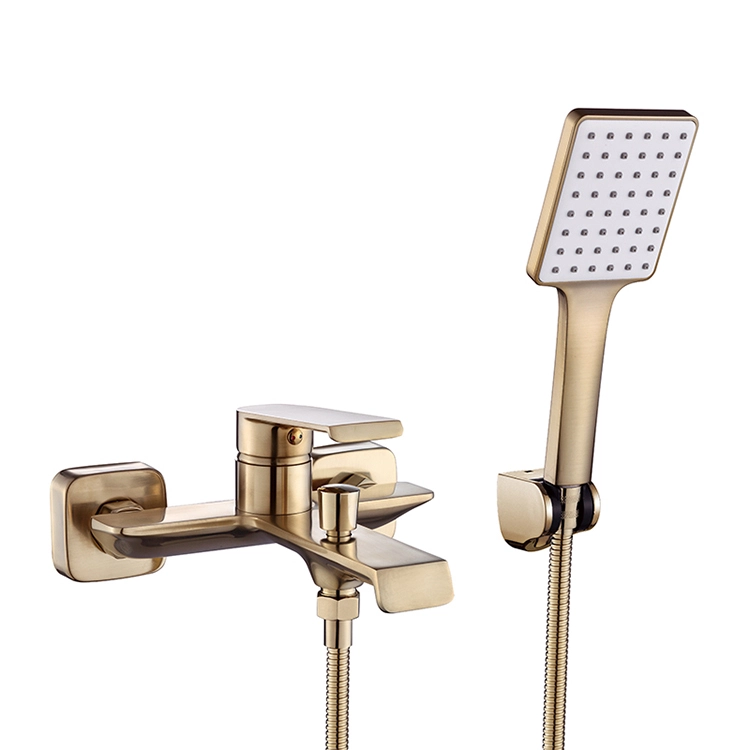
Ten years ago, most export orders we handled were still dominated by polished chrome. Today, more customers ask for brushed gold, gunmetal gray, brushed bronze, or champagne-colored finishes. Much of this change has been driven by interior design trends.
Homeowners no longer see faucets as purely functional products. They've become part of the overall design style. That's where PVD, or Physical Vapor Deposition, has become increasingly important.
Unlike traditional electroplating, PVD is completed inside a vacuum chamber. After the faucet has already been electroplated, metals such as titanium or zirconium are vaporized and bonded to the surface at an atomic level, creating an extremely hard protective layer.
The result is better scratch resistance, stronger color stability, and excellent durability.
But here's something I often tell customers: PVD isn't automatically the right choice simply because it's more expensive. I've actually recommended standard chrome to some customers, even though PVD would have increased the value of the order.
Why? Because the products were intended for budget apartment projects where buyers cared far more about price than decorative finishes. In those situations, premium chrome offered much better value.
On the other hand, one of our European private-label customers gradually replaced almost their entire chrome collection with brushed gold PVD finishes. Their customers weren't simply buying faucets. They were buying a complete kitchen design. For them, appearance became part of the product's value, and investing in PVD helped reduce after-sales complaints while strengthening their premium brand image.
Neither decision was wrong. They simply served different markets.
Whenever someone asks me which finish I would choose, I usually respond with another question: "Who will eventually use this faucet?" That's because I don't believe there's a universal "best" finish. A luxury villa project, a supermarket chain, and an online retailer are solving completely different business problems. The best finish is the one your customers won't complain about after years of daily use.
Matte black has become one of the fastest-growing faucet finishes over the past few years. Unfortunately, it has also created one of the biggest misunderstandings in the industry.
Many buyers assume all matte black faucets are produced using the same process. They're not. I've seen low-cost powder-coated faucets that looked fantastic when they left the factory but started peeling around sharp edges after months of installation.
That doesn't mean powder coating is unreliable. It usually means the manufacturing process wasn't.
Today's premium powder coating systems are very different from those used years ago. At Kingsdom, matte finishes are produced using upgraded coating materials, carefully controlled baking temperatures, and an additional anti-fingerprint protective layer. These improvements make the surface smoother, easier to clean, and much more resistant to everyday wear.
For many modern residential projects, powder coating offers an excellent balance between fashionable design and reasonable production cost.
Whenever customers ask which finish they should choose, I don't start by talking about technology. Instead, I ask three questions. Who are your customers? Where will the faucets be installed? What matters most to your market—price, appearance, or long-term durability?
If you're supplying supermarkets or large residential developments, premium electroplating is often the most practical solution. If you're building a premium private-label brand or targeting luxury renovation projects, PVD usually delivers greater value. If your customers love contemporary matte interiors but still need competitive pricing, high-quality powder coating deserves serious consideration.
Technology should always match your market. Not the other way around.