When you visit a faucet supplier in China, the showroom is the easiest part to see.
The harder part comes after you leave. Who actually runs the machines? Who controls the brass? What happens to parts after surface finishing? And will mass production still match the sample you approved?
I've sat through factory visits at our plant in Wenzhou with distributors, project buyers and private-label brands. The useful ones usually follow the same instinct:
Don't just look at the showroom. Follow the product.
A factory audit isn't about finding a perfect supplier. It is about verifying what the supplier tells you and understanding who controls each important step.
Here are five things I would check first.
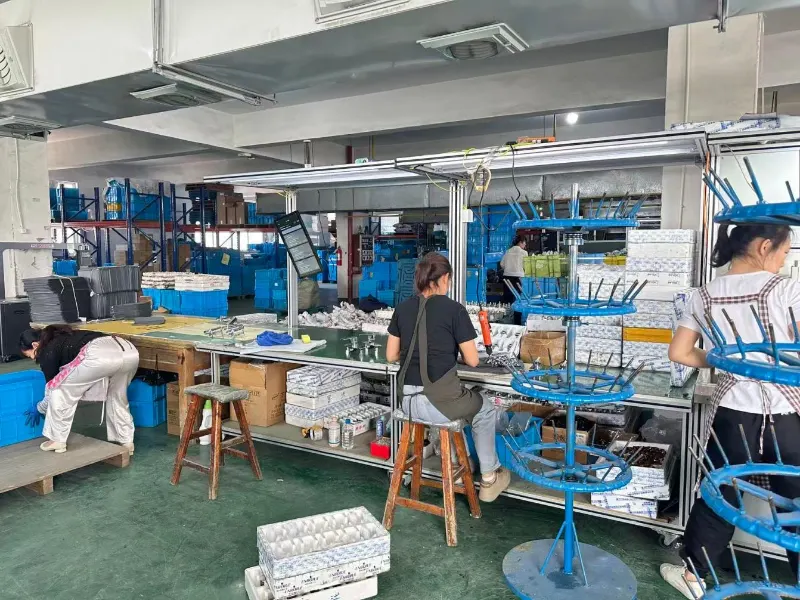
A business licence is a useful starting point, but it should not be your only proof that you are dealing with a manufacturer.
Some faucet factories handle most processes in-house. Others outsource specific stages such as casting, plating or certain components. Outsourcing itself isn't necessarily a problem. What matters is who controls the process and who checks the result.
During a factory visit, ask to follow one faucet through its actual production route:
Brass casting or purchased brass components
CNC machining
Polishing
Surface finishing
Assembly
Functional testing
Final inspection and packing
Then ask two questions:
Which processes are handled in-house?
Who inspects the parts when they return?
You should also compare the supplier's claimed capacity with what you see on the floor. A company quoting a large monthly volume should be able to explain how its equipment, workers and assembly capacity support that number.
Many faucet manufacturers use specialist facilities for plating and other surface-finishing processes. That does not automatically make the supplier less reliable.
The important question is what happens when the finished parts come back.
Ask how the factory checks:
Surface appearance
Coating thickness, where applicable
Adhesion
Corrosion resistance when required
Scratches, uneven colour and other visible defects
If the supplier has testing equipment, ask to see recent records rather than simply looking at the machine.
For example:
“Can you show me the recent test record for this finish or model?”
A machine in a laboratory proves very little by itself. What matters is whether the test procedure is defined, the equipment is actually used and the results are recorded against identifiable products or batches.
This becomes particularly important when you are buying products with different finish and design requirements. For example, a Modern Chrome Rain Shower Set may look straightforward, but the buyer still needs to confirm the finish quality, component consistency and inspection procedure before approving mass production.
A faucet can look perfect after polishing and plating and still leak once water pressure is applied.
That's why the testing area deserves more attention than a framed certificate in the meeting room.
Instead of asking only, “Do you test the faucets?”, ask:
What is tested on the finished faucet?
Is testing performed on every unit or according to a sampling plan?
What pressure and test duration apply to this model?
How are failed units identified and handled?
Are test results linked to a batch or production order?
The actual pressure and duration should come from the agreed product specification and quality plan rather than one universal number for every faucet.
If you are visiting the factory, ask an operator to demonstrate the test on a current production unit. Watch the gauge, the procedure and what happens to a failed unit.
Also remember that production testing and AQL acceptance inspection serve different purposes. AQL-based sampling can be used for final lot inspection, while the factory should still have a defined functional or leak-testing procedure for the product.
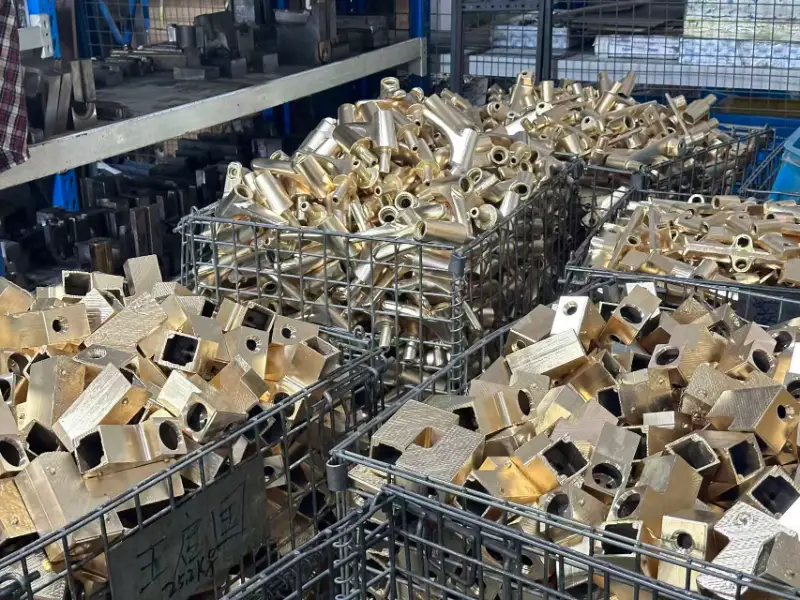
Brass is easy to overlook because you cannot see the material once the faucet has been machined, polished and plated.
Don't ask only:
“What brass do you use?”
Ask:
“How do you verify it?”
Depending on the factory, material control may include:
A defined brass specification
Approved raw-material suppliers
Material test reports (MTRs)
Batch or heat-number traceability
XRF or OES testing, where available
Third-party verification when required
The key is traceability. If a material batch is later found to be outside specification, can the factory identify which production orders used it?
Also make sure the material requirement matches your target market. If your project requires lead-free compliance, don't rely on the alloy name alone. Confirm the applicable market requirement and the evidence needed before production starts.
This is one of the most expensive problems a buyer can face.
You approve a faucet with a specific cartridge, finish, aerator and packaging. Months later, the production version arrives with a different cartridge or noticeably different finish.
The problem often starts because the sample was treated as a showroom piece rather than a production specification.
Before mass production, put the important details in writing, including where applicable:
Faucet model and drawings
Brass material specification
Cartridge brand and size
Finish requirements
Flow-rate requirements
Aerator, hose and other components
Packaging
Applicable testing requirements
If an approved component or production detail needs to change, the supplier should communicate the change before production rather than making the decision silently.
For larger orders, agree on the final inspection process in advance. A third-party inspection can provide additional verification, while an acceptance-sampling plan such as ISO 2859-1 can be used where appropriate.
The objective is simple:
The product you inspect should be the product you actually ordered.
A live remote audit is still useful.
Instead of asking for another set of factory photos, ask the supplier to walk through the production process in real time.
Ask to see:
Production or machining
Assembly
Testing stations
Recent QC records
A current production unit being tested
Then ask a few simple questions:
Which processes are in-house?
Which are outsourced?
Who checks outsourced parts when they return?
What happens when a faucet fails inspection?
Can you show a recent QC record?
A good supplier does not necessarily have the same production setup as another good supplier. What matters is whether the setup is clear and the quality-control process can be supported with records.
|
What to Check |
What to Ask |
|
Production |
Which processes are handled in-house? |
|
Capacity |
Does the equipment support the stated output? |
|
Materials |
How is brass verified and traced? |
|
Finishing |
Who checks finished parts when they return? |
|
Testing |
What is tested and how is it recorded? |
|
Cartridge |
Which brand and model are specified? |
|
Sample |
What document controls mass production? |
|
Inspection |
What final inspection plan is agreed? |
A factory audit doesn't have to become a two-day investigation.
Spend less time in the showroom and more time following the product. Look at the material, follow the production route, watch the testing, and ask for the records.
Then compare what you see with the quotation, specifications and approved sample.
At Kingsdom Faucet in Wenzhou, we welcome buyers who want to understand how their faucets are produced rather than simply look at finished displays. We can arrange a walkthrough around the models and specifications being considered, including the production, assembly and quality-control points relevant to the project.
For applicable models, we can provide relevant CE documentation, EN 817 test reports and ACS files, depending on the product and target market. We also clarify when a certification or test document does not apply to a specific product or market.
If you're planning a factory visit in Wenzhou or evaluating suppliers remotely, send us the models you're considering. We can organise the discussion around the production and QC points that matter to your project.